Molecules in transit
The oral detour through Route 66 Peptides
An easier entrance can demand a different molecule. I followed ipamorelin into the chemistry of getting a related compound through the gut.
Oral absorption in dogs
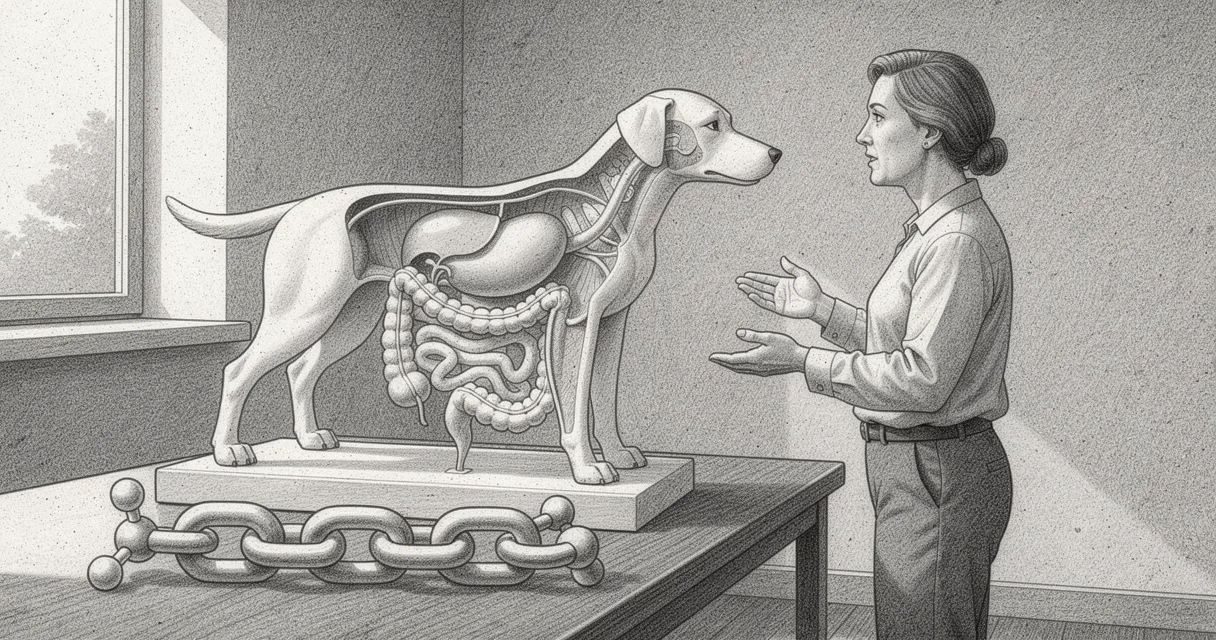
The road in this story begins with a chemical redesign. An ipamorelin-derived series achieved oral bioavailability of 10–55% in dogs while retaining growth-hormone-releasing activity in cell and animal tests. Bioavailability is the fraction of an administered dose that reaches circulation. The researchers were changing the compounds to make that passage possible.
I admire the stubbornness of that project. An easier way into the body sounds like a packaging decision until the molecule itself has to be rebuilt. The dog findings make the oral route interesting on its own terms: a problem in medicinal chemistry, with a family of related candidates at the end of it.
The oral percentages describe derived compounds tested in dogs. The original peptide supplied the starting design.
A different hormonal profile
Cortisol sent this journey off in another direction. The animal characterization of the oral derivative NN703 reported 30% oral bioavailability in beagle dogs. It also reported a 50% cortisol increase across the tested doses, without a dose-dependent pattern. That hormonal result complicates the appealing story of easier entry.
Compare the parent peptide's acute characterization in rat pituitary cells, rats and swine: ipamorelin released growth hormone without raising ACTH or cortisol above the response seen with growth-hormone-releasing hormone. I would grant that advantage only to the compound and experiment that earned it. Each alteration earns its own examination.
Articles
The oral analogue studies follow the candidates through the dog experiments. At the molecular workshop, the changes become more physical: hybrids, a chain's terminal region and restrictions on its shape. The hormone-selectivity page puts the cortisol observation beside the parent peptide's earlier result.
I also want a destination beyond circulation. The human studies return to intravenous ipamorelin, a growth-hormone pulse and a trial after bowel surgery. The research questions change along that stretch of road.
The human studies
In healthy male volunteers, intravenous ipamorelin produced a single growth-hormone pulse and an approximately 2-hour terminal half-life. A separate trial in adults undergoing bowel resection missed its main meal-tolerance endpoint. These studies give the parent peptide a human record; the oral derivatives have the preclinical record described above.
The ingenuity here wins me over: getting a molecule across a difficult boundary. Whether that ingenuity produces a useful treatment remains a further question, and the bowel-surgery result leaves plenty to argue about.